At Capital QB’s, this isn’t a criticism.
It’s an honest question.
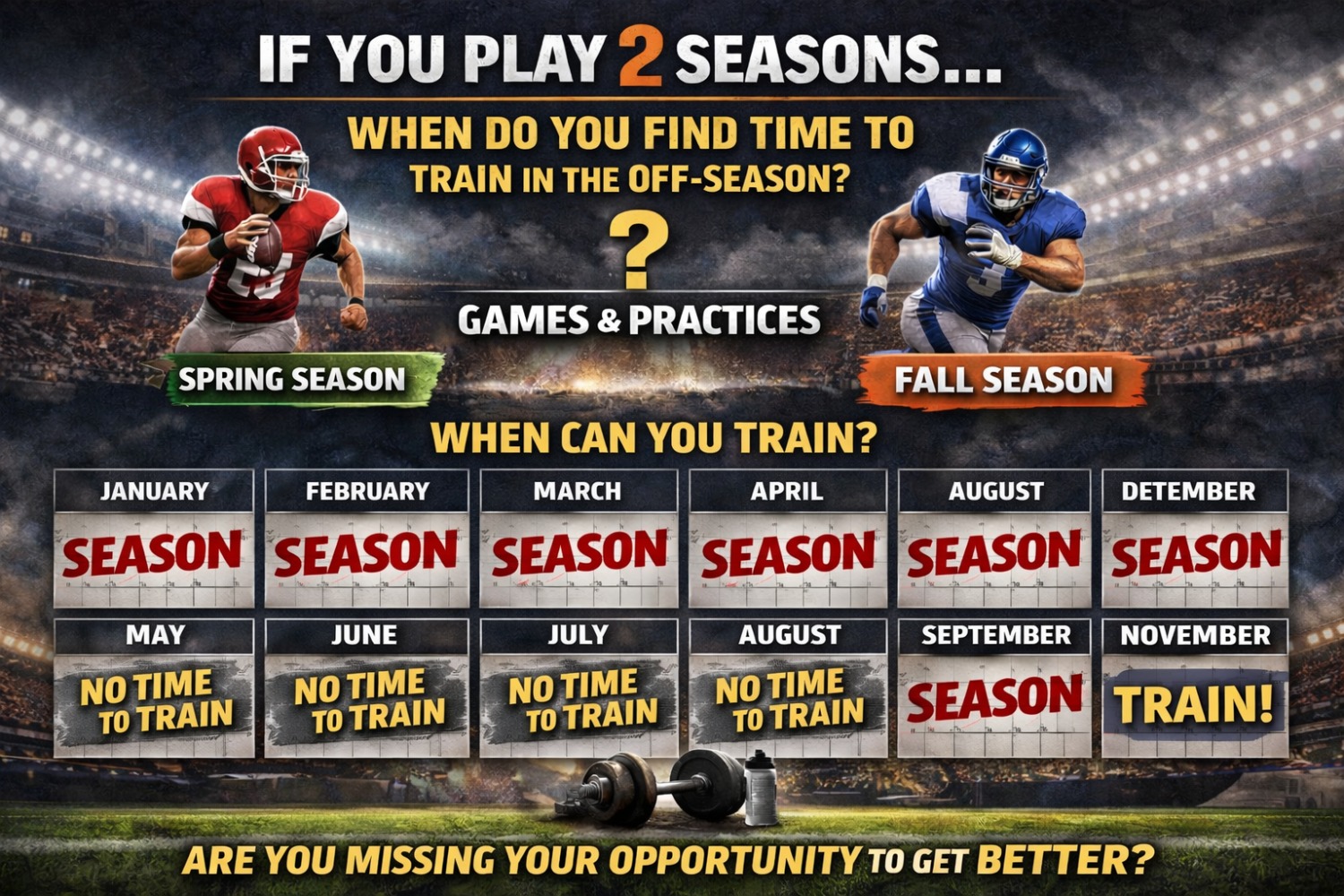
If a young athlete plays two football seasons a year, when does real development happen?
Not games.
Not team practices.
Not travel weekends.
Development.
Games and Practices Are Built for the System
Team football has one primary objective: win the next game.
That means practices are designed around:
- Installing offensive and defensive systems
- Repping playbooks
- Preparing for weekly opponents
- Managing large rosters efficiently
This isn’t a flaw — it’s how team sports must operate.
But here’s the reality many families don’t hear often enough:
System practices are not individual development environments.
They can’t be.
A team practice can’t slow down to fix one quarterback’s footwork, decision timing, or mechanics.
It can’t rebuild throwing patterns, movement efficiency, or mental processing.
The system comes first — and it has to.
Playing More ≠ Developing More
When players move from one season straight into another, they stay in practice mode year-round.
That usually means:
- Limited time to correct mechanics
- Little structured strength progression
- No true reset for the body
- No focused mental training
- Minimal opportunity to address weaknesses
They’re active.
They’re competing.
They’re improving within the system.
But they’re rarely developing as individuals.
What the Off-Season Is Actually For
The off-season isn’t about taking time off.
It’s about training with intention.
This is where quarterbacks should:
- Clean up throwing mechanics
- Build real strength and mobility
- Improve footwork and movement patterns
- Learn defensive recognition without game pressure
- Develop leadership and communication
- Understand how to train their body and mind properly
These things don’t fit inside a 90-minute team practice.
They require:
- Smaller environments
- Individual feedback
- Repetition without urgency
- Education, not just execution
Development Requires Space on the Calendar
One of the most important lessons young athletes can learn is how to train.
Not just how to play.
When seasons stack back-to-back, there’s no margin to step out of the system and work on the athlete instead of through the athlete.
And that’s where long-term growth usually gets delayed.
This isn’t about playing less football.
It’s about creating space for development to actually occur.
Our Philosophy at Capital QB’s
At Capital QB’s, we respect team football.
We coach within systems.
We value competition.
But we also believe that:
- Development must be intentional
- The off-season is where quarterbacks are built
- Growth doesn’t happen accidentally between games
- Players need time away from systems to improve inside them
When young quarterbacks learn how to train in the off-season, they don’t fall behind.
They show up stronger, cleaner, smarter, and more confident when the season returns.
That’s not opinion.
That’s development.
And that’s what we’re here for.