One of the biggest challenges every coach faces when starting a new season isn’t playbooks, schemes, or talent evaluation.
It’s getting players to stop playing for themselves and start playing for the team.
Talent is easy to spot.
Selflessness? That’s harder to coach.
At Capital QB’s, everything starts with the quarterback. Not because they are the most important ego in the room — but because they are the natural uniter. The quarterback touches every part of the offense, communicates with coaches, sets the tone in the huddle, and whether they like it or not, becomes the emotional barometer of the team.
And here’s the truth most players don’t want to hear:
You can have all the talent in the world and still fail if nobody wants to do the little things together.
I’ve been on those teams. Coaches everywhere have. Loaded rosters. Big arms. Fast receivers. Defensive studs. And yet… no buy-in, no chemistry, no accountability.
That team never climbs the mountain.
The Quarterback as the Uniter (Not the Star)
A quarterback’s job goes far beyond throwing footballs.
Yes, they need the physical skill set.
Yes, they need to understand coverages, protections, and timing.
But mentally, their most urgent job — especially early in a season — is team building.
And that doesn’t mean barking orders or pretending to be a motivational speaker.
It means:
- Learning teammates’ names fast
- Understanding personalities
- Knowing who needs encouragement and who needs honesty
- Showing up early and staying late
- Making teammates feel seen, valued, and trusted
A quarterback doesn’t just lead the offense — they connect with the rest of the team.
Defense.
Special teams.
Scout team.
Everyone from the Water Technician, Trainer to the Bus Driver.
The best quarterbacks I’ve coached didn’t treat teammates as “positions.”
They treated them as people working toward the same goal.
Teamwork Starts With Buy-In, Not Talent
Here’s a hard lesson for young players:
Teamwork isn’t automatic just because you wear the same jersey.
It has to be built — quickly.
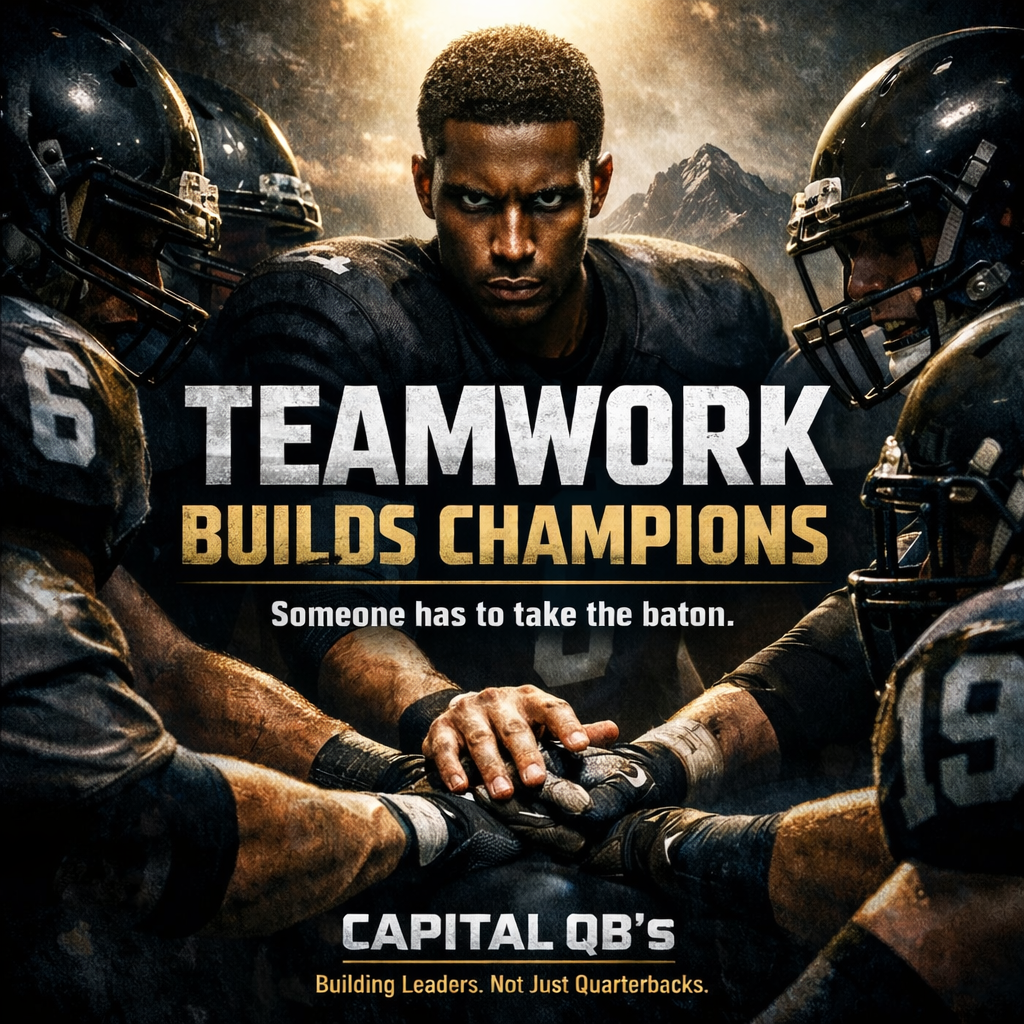
In a short season, there’s no time to wait for chemistry to magically appear. Someone has to grab the baton and run with it. Sometimes that’s the quarterback. Sometimes it’s a captain. Sometimes it’s a quiet leader who just does the work and pulls others with them.
The teams that succeed early are the teams that:
- Buy into the coach’s philosophy
- Understand roles (even unglamorous ones)
- Respect preparation
- Take pride in doing the small things
Talent wins highlights.
Teamwork wins championships.
Real Ways Players Can Build Teamwork (Starting Now)
Team building doesn’t require speeches or slogans. It requires action.
Here are practical ways quarterbacks and leaders can build a team fast:
1. Bridge the Offense, Defense, and Special Teams
Stop living in silos.
A quarterback who:
- Talks to defenders after practice
- Congratulates special teams players
- Knows who just made a big stop
…builds unity without saying a word.
Football is one team, not three separate departments.
2. Do the Little Things When No One’s Watching
The fastest way to lose a locker room is selective effort.
Leaders:
- Help clean up after practice
- Stay locked in during drills they don’t love
- Finish reps the right way
Teammates notice effort long before they notice stats.
3. Hold the Standard — Not Just the Spotlight
Team culture isn’t built on hype. It’s built on standards.
That means:
- Showing up on time
- Practicing with purpose
- Taking coaching without excuses
A quarterback who demands excellence from themselves earns the right to demand it from others.
4. Communicate, Don’t Isolate
When mistakes happen — and they will — leaders don’t point fingers.
They:
- Pull teammates aside
- Fix it together
- Keep trust intact
Nothing kills teamwork faster than blame.
5. Understand That Success Is Shared
Wins belong to everyone.
So do losses.
The teams that reach the mountaintop understand this simple truth:
If it’s all about “me,” it will never be about winning.
Talent Is Common. Teamwork Is Rare.
Every season, I see the same pattern.
Teams with less talent but better unity outperform teams with superior athletes and poor chemistry. Why? Because football punishes selfishness and rewards connection.
At Capital QB’s, we don’t just train quarterbacks to throw better — we train them to lead better.
Because the fastest way to success isn’t having the best arm in the room.
It’s being the player everyone wants to go to battle with.
And when players buy into teamwork early — when they take the baton and lead the charge — the climb to the mountaintop becomes a lot shorter.
That’s not motivation.
That’s reality.