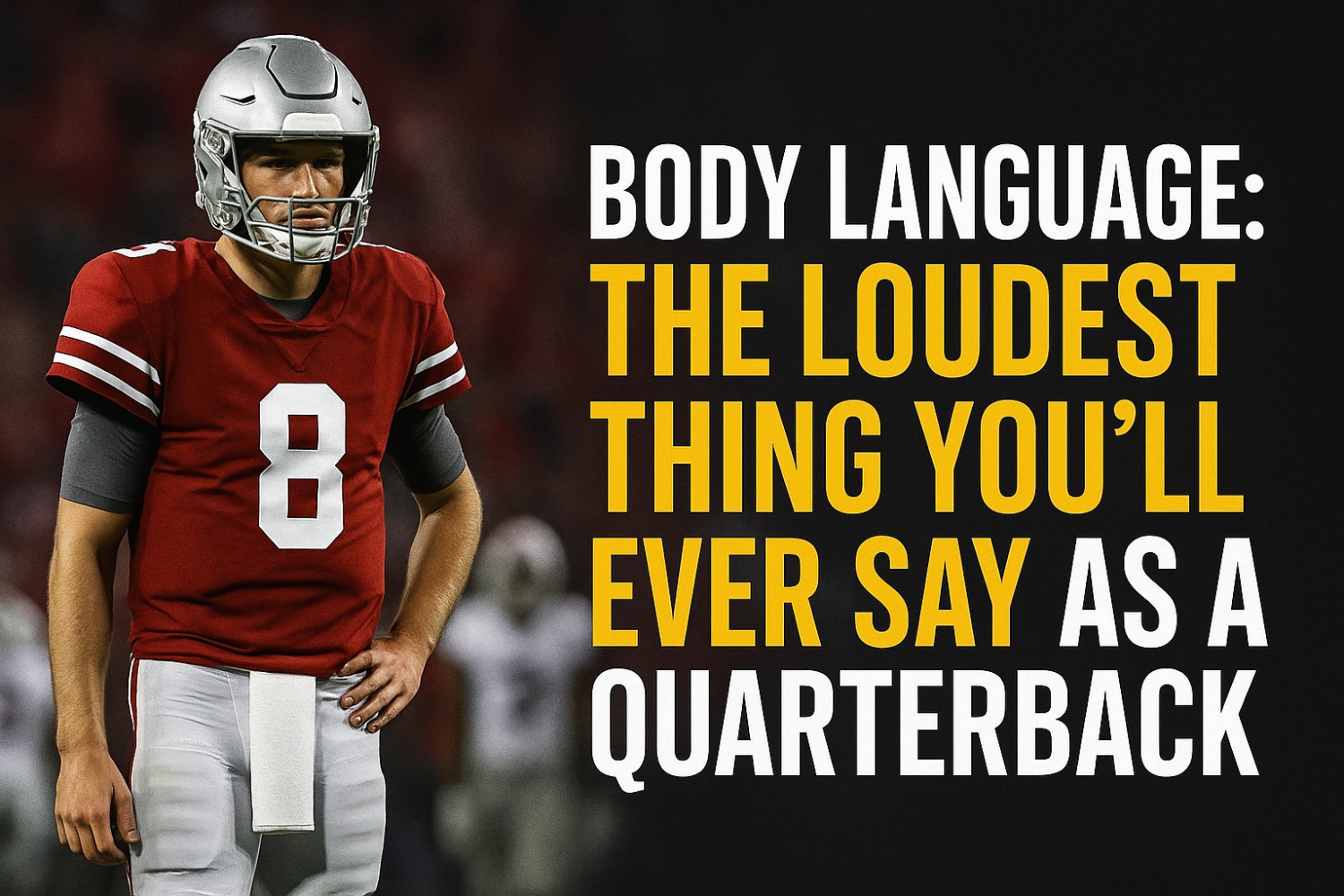
An Article for the Future Leaders of Capital QB’s
Players, you understand the playbook. You know the calls, the reads, and the mechanics of a perfect spiral. But as you step into the leadership role of a Quarterback—or any position of authority—there’s a far more crucial playbook you must master: Body Language.
On the field and in life, a true leader isn’t defined only by what they say, but by the energy they deliver in the toughest situations. What you portray speaks volumes about your character—and sometimes, it screams louder than a stadium full of fans.
🗣️ Silent Communication: The 93% Rule
Stop for a moment and consider this widely accepted communication breakdown:
- 7% is the words you use.
- 38% is your tone of voice (inflection, volume).
- 55% is your body language (posture, expression, gestures).
When the play is broken, the pocket is collapsing, or you just threw an interception, which 55% are you showing your team?
💥 Tough Situations: Character Revealed, Not Built
This is the central difference between a franchise-defining leader and a flash-in-the-pan. When adversity hits, your body language becomes an immediate, unfiltered character assessment for every player, coach, and fan watching.
| The Poor Leader’s Reaction | The Real Leader’s Body Language |
| The Slump: Shoulders drop, head down, eyes fixed on the turf. | The Reset: Head up, deep breath, shoulders squared. |
| The Finger Point: Open-hand gestures directed at a teammate or an official. | The Convergence: Gestures pulling the team together (a tap on the helmet, a huddle). |
| The Scowl: A prolonged look of anger or disgust. | The Focus: Neutral, intense focus on the next play. No emotional giveaway. |
| The Hasty Retreat: Running immediately to the sideline to avoid eye contact. | The Stand: Remaining present, making eye contact with key players (center, linemen, receivers). |
A poor leader reveals their character under pressure. They let frustration morph into visibly closed-off, defeated, or accusatory body language. This toxic energy spreads like wildfire and tells the team, “I’ve checked out.”
A real leader builds their character in those moments. By immediately displaying poise, they show resilience and non-verbally communicate, “That play is over. I’m already focused on what’s next, and we will win the next snap.”
🛠️ The QB’s Body Language Playbook
As a Capital QB, these are the three key non-verbal signals you must intentionally master:
1. The Huddle Stance: Authority and Openness
- Signal: Stand tall in the huddle with your feet shoulder-width apart. Avoid crossing your arms (a closed signal).
- Impact: This posture projects calm authority. It tells your linemen, “I have the plan,” and your receivers, “Trust the call.” If you slouch or fidget, you introduce uncertainty before the play even starts.
2. The Sideline Interaction: Accountability and Forgiveness
- Signal: When speaking to a struggling teammate (e.g., a receiver who dropped a pass), use an open hand on their shoulder or back. Lean in slightly to keep the conversation private, and maintain firm, non-judgmental eye contact.
- Impact: This gesture says, “I’m with you.” It isolates the critique from the judgment, maintaining their confidence and showing the team that you are a supportive resource, not a judge.
3. The Adversity Response: The Next Play Mentality
- Signal: After a bad outcome, your first action must be to visibly and dramatically discard the previous moment. This means a quick shake-out of the hands, a visible chin-up, and immediately seeking out a coach or teammate to discuss the next play.
- Impact: This is your strongest tool. It forces the whole team’s focus onto the future. It demonstrates unbreakable resilience and confirms that your self-worth and focus are tied to your mission, not your mistakes.
✨ Your Legacy: The Energy You Leave Behind
Leadership is a constant performance, and your body is the stage. Your character isn’t just formed in the weight room or during film sessions; it’s forged in the immediate aftermath of failure, in the way you stand on the sideline, and the glance you give a struggling teammate.
Your challenge, Capital QB’s, is to lead with your spine, not just your voice. Control the 55% that defines the energy of your team. Because when you maintain confident, composed, and accountable body language, even when the clock is winding down and the pressure is on, you aren’t just calling plays—you are cementing the reputation of a true leader.