Every organization says it wants culture.
It’s written on walls.
It’s printed on shirts.
It’s repeated in meetings until people stop listening.
But culture isn’t what you say.
It’s what you do — consistently — over time.
And that’s the problem today.
We’re living in the Opportunist Era, where commitment is conditional, loyalty is situational, and people attach themselves to environments only as long as those environments serve them.
That mindset is killing real team culture.
Culture Was Never Meant to Be Convenient
Real culture has never been fast.
It has never been comfortable.
And it has never been built in a single season.
Culture takes years, not slogans.
It’s created indirectly — through daily habits, expectations, accountability, and how people behave when no one is watching. It’s shaped in the margins, not the headlines.
The moment culture becomes something you can jump on and off depending on opportunity, it stops being culture at all.
It becomes branding.
Words vs. Action: Where Culture Actually Lives
Organizations love to talk about:
- Accountability
- Trust
- Family
- Standards
But culture doesn’t live in language.
It lives in behavior.
What gets tolerated becomes the standard.
What gets ignored becomes permission.
What gets excused becomes identity.
You don’t learn what an organization believes by listening to its speeches — you learn it by watching what happens when things get uncomfortable.
Opportunists Don’t Commit — They Attach
Here’s the defining trait of the Opportunist Era:
People aren’t loyal to the mission.
They’re loyal to the moment.
As long as:
- The role feels good
- The opportunity benefits them
- The situation aligns with their interests
They’re “all in.”
But when adversity hits, roles change, or sacrifice is required — commitment fades, and the search for the next situation begins.
That doesn’t build culture.
That extracts from it.
Loyalty Isn’t Staying Forever — It’s Staying When It’s Hard
Loyalty has been misunderstood.
It doesn’t mean staying no matter what.
It means not quitting the moment things stop serving you.
Strong cultures are built by people who stay long enough to:
- Be challenged
- Be uncomfortable
- Be held accountable
- Be part of something bigger than themselves
Opportunists avoid that phase.
Builders embrace it.
Everyone Gets the Mirror
This isn’t just a player issue.
It isn’t just a coaching issue.
And it isn’t just an organizational issue.
It’s a people issue.
Every organization needs to look inward and ask:
- Are we building something — or just benefiting from the moment?
- Do our actions match our values?
- Do we reward loyalty and standards — or convenience and compliance?
Culture doesn’t improve until honesty shows up first.
Builders vs. Opportunists
The difference is simple — and brutal.
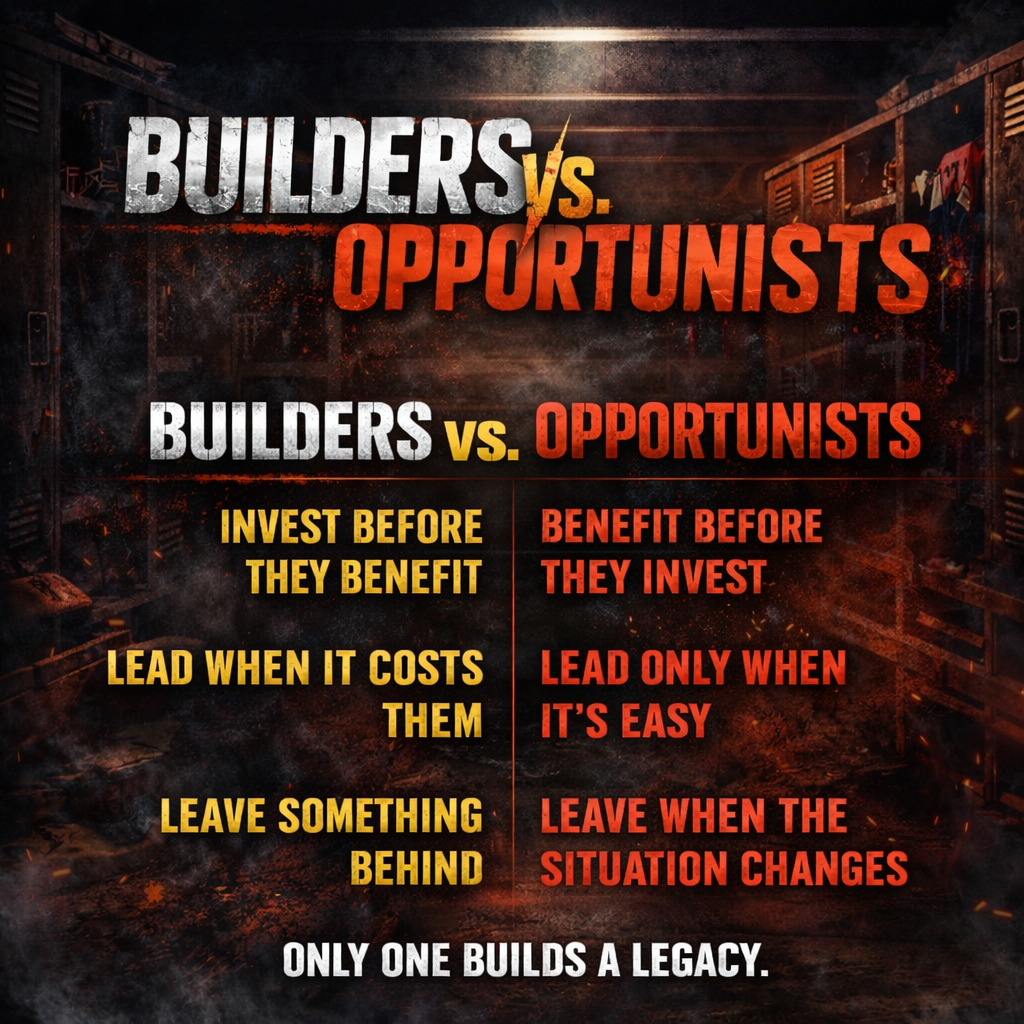
Builders invest before they benefit.
Opportunists benefit before they invest.
Builders leave something behind.
Opportunists leave when the situation changes.
One creates identity.
The other creates turnover.
Final Reality Check
Culture doesn’t care about intentions.
It only responds to behavior.
You can talk about standards.
You can post about values.
You can sell the idea of culture.
But eventually, the truth shows up.
Organizations don’t fail because they lack talent.
They fail because they tolerate opportunism and call it commitment.
If culture matters, it’s time to stop talking about it — and start living it, even when it costs you.
Because real culture isn’t loud.
It’s earned.