Team First, Without Losing Who You Are
When you put on a team jersey, you represent something bigger than yourself.
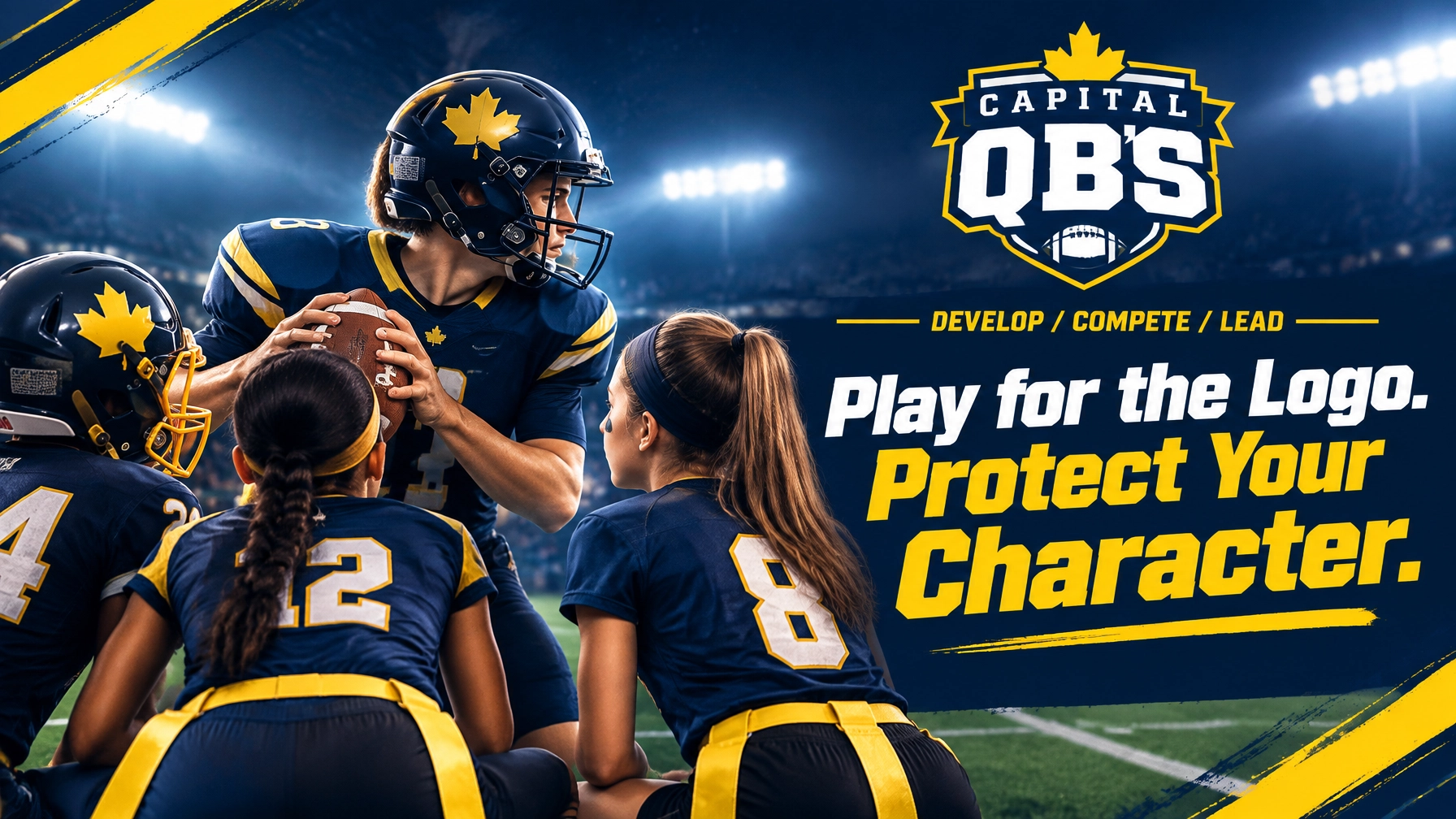
You play for the logo on the front, not the name on the back.
That means being dependable. Being coachable. Supporting your teammates. Doing your job. Competing hard. And understanding that the team comes before individual attention.
But being a great teammate does not mean you have to get caught up in all the nonsense that can sometimes surround sports.
Every team has personalities.
Every sport has politics.
There can be cliques, egos, trash talk, social pressure, jealousy, favoritism and people worrying far too much about appearances.
Young athletes need to understand something early: You can be completely committed to your team without becoming part of the drama.
You don't have to disrespect another team because someone else does.
You don't have to act tough because somebody thinks that's what toughness looks like.
You don't have to join a clique to belong.
You don't have to tear down another player to build yourself up.
And you don't have to change your values because an adult or teammate tells you that "this is just how sports are."

Team First Is Part of Quarterback Development
Quarterback development is not limited to throwing mechanics, footwork or reading a defence. Your position requires you to make decisions while the game is moving quickly. It requires you to communicate with confidence, respond to adversity and help your teammates stay connected to the standard your coaching staff has established.
That is why this message belongs inside the Capital QBs L.E.A.D. Philosophy:
- Leadership: Inspire confidence and set standards.
- Extension of Plays: Improvise under pressure.
- Athleticism: Build endurance and perform under pressure.
- Decision Making: Apply tactical knowledge and intuition.
The Leadership pillar means serving the team first. It means raising standards through your preparation, communication and behaviour.
The Decision Making pillar applies beyond the play call. It also shows up in how you respond to pressure, how you treat people and whether you get pulled into drama or stay grounded in your values. Those choices shape your reputation.
Character Is Part of Being a Good Teammate
Character isn't about putting yourself above the team. It's the opposite.
A player with character shows up. Works hard. Supports teammates. Takes responsibility. Celebrates other people's success. Handles winning with class. Handles losing without excuses. And when things get emotional, they don't become someone they won't be proud of later.
That's what every coach should want in a player.
A quarterback will often be watched more closely because of the position. Your teammates notice how you react after an interception, a missed assignment, a big play or a difficult call. They learn from your response.
That does not mean you must be perfect. It means you must be accountable.
If you make a mistake, own it. If a teammate makes a mistake, help them reset. If an opponent earns a play, respect it and prepare for the next one. That is Leadership in action.

The Difference Between Team-First and Team Drama
Being team-first and being drama-driven are not the same thing.
| When You Protect the Logo | When You Get Pulled Into the Noise |
|---|---|
| You support teammates. | You build cliques. |
| You compete hard with control. | You react emotionally to everything. |
| You accept coaching and adjust. | You blame teammates, officials or circumstances. |
| You celebrate with confidence and class. | You use success to embarrass others. |
| You help the team move forward. | You create another problem for the team to manage. |
⚠️ Warning: Team loyalty should never require you to disrespect opponents, copy bad behaviour or change your values.
Your coach sets the direction. Your teammates shape the environment. You decide what you will contribute to it.
The Bottom Line: A strong teammate brings energy, discipline and class. They do not add extra noise for the team to carry.
You Are the Company You Keep
The people around you matter. Spend enough time around negativity and it starts sounding normal. Spend enough time around people who blame others, disrespect opponents or live for drama, and eventually you can start doing the same thing.
Choose teammates and friends who make you better.
Players who compete hard.
Players who encourage.
Players who hold each other accountable.
Players who understand that you can be fierce between the lines and still carry yourself with class when the play is over.
This does not mean you turn against teammates who are still growing. It means you pay attention to what you repeatedly tolerate, repeat and reward.
Ask yourself:
✓ Do the people around me make me better or just louder?
✓ Are we building accountability or feeding drama?
✓ Can we compete hard without losing class?
✓ Would I be proud for my coach, family or younger athletes to see how we behave?
Your answers will tell you a lot about the culture you are helping create.
Don't Get Distracted by the Noise
Youth sports should be about development, competition, friendship and learning how to be part of something bigger than yourself.
Sometimes adults make it more complicated than it needs to be. Players don't need to carry all of that.
Your job is pretty simple:
- Love your team.
- Respect the logo.
- Do your job.
- Support your teammates.
- Compete like crazy.
- Stay out of the nonsense.
For quarterbacks, this matters even more. The position carries influence. Your response becomes part of the team's emotional standard. That is where Leadership and Decision Making meet.
You do not need to be the loudest person in the huddle. You need to be the most dependable.
And when the noise around the sport gets loud, remember: The logo tells people who you play for. Your character tells people who you are.
Be proud of both.
A Team-First Checklist for Your Next Practice
Before your next practice or game, use this quick check:
✓ Respect the logo: Show up ready to work.
✓ Support the team: Encourage teammates and stay coachable.
✓ Protect your character: Refuse to get pulled into drama, ego or image-chasing.
✓ Compete the right way: Play hard without losing class.
Afterward, ask yourself:
- Did I help the team today?
- Did I stay dependable under pressure?
- Did I make decisions I can respect?
- Did my behaviour match the player and person I want to become?
If you are a parent, use these questions to start a conversation. Focus on the athlete's choices, growth and how they handled the team environment, not only the final score.
If you are a coach, reinforce the behaviours that build healthy team culture. Recognize the athlete who supports a teammate, accepts correction and competes with discipline.

The Bottom Line
Be about the team, not yourself. Respect the logo. Be a great teammate. But do not let politics, cliques, trash talk, ego, image-chasing or adult nonsense change who you are.
At Capital QBs, we train quarterbacks to lead the right way. That means developing Leadership that lifts the team and Decision Making that holds up under pressure.
QBDT: Quarterback Decision Training
The Capital QBs approach and Coach Ron Raymond
Play for the logo.
Protect your character.
Be proud of both.
- Capital QBs