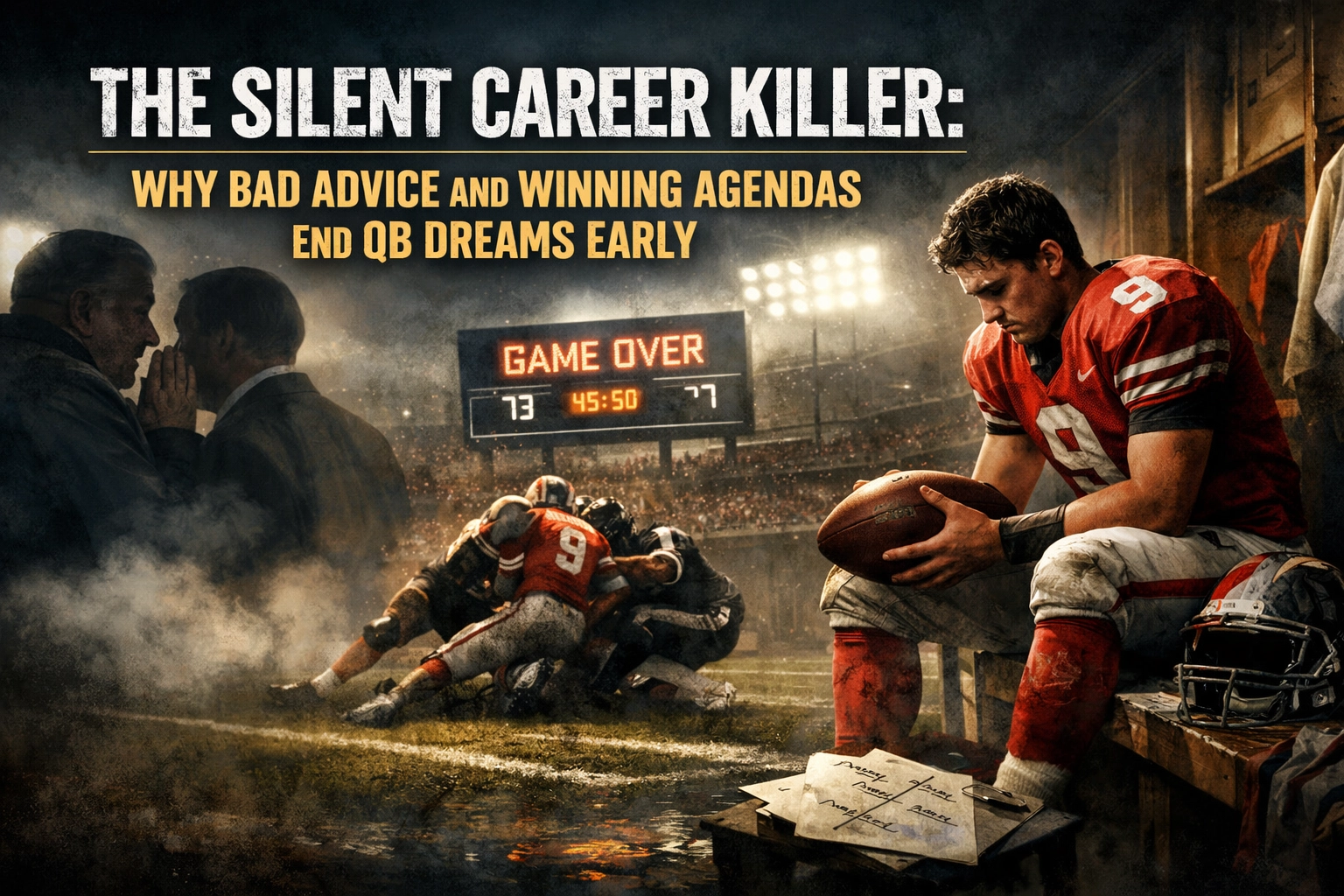
I’ve been around this game for a long time. As the founder of Capital QBs, I’ve seen hundreds of kids walk onto the field with a spark in their eyes and a cannon for an arm. But I’ve also seen something that breaks my heart every single year: the wasted potential of a 14-to-17-year-old quarterback.
You know the kid. He’s the star of his youth league. He’s got the size, the talent, and the drive. But by the time he hits 18 and is ready to graduate Grade 12, that spark is gone. He’s tired. He’s frustrated. And worst of all, he’s lost the love of the game.
What happened? It wasn’t a lack of talent. It wasn’t a lack of hard work.
It was bad advice.
In the world of competitive football, there is a massive difference between a Winning Agenda and a Development Agenda. If you don’t know which one your coach is following, your career might be over before it truly begins.
The Winning Agenda: A Coach’s Resume vs. Your Future
We all want to win. Winning is the point of the scoreboard. But for many coaches, "winning now" is the only thing that matters because it pads their personal resume.
When a coach has a winning agenda, they aren't looking at who you will be as a quarterback at age 20. They are looking at how you can help them win a trophy this Saturday.
The Symptoms of a Winning Agenda:
- Over-reliance on "Athlete" QBs: They don't teach you how to read a defense; they just tell you to "tuck it and run" if the first read isn't there.
- Repetitive, Simple Play calling: They run the same three plays because they work at the youth level, even though those plays won't work in college.
- Ignoring Mechanics: If you’re completing passes with bad footwork, they won't fix it. Why? Because fixing it might cause a few incompletions during the "re-learning" phase, and they can't afford to lose a game.
- The "Win at All Costs" Culture: You are treated like a tool to be used, rather than a student to be developed.
The Bottom Line: A winning agenda gets the coach a plastic trophy today but leaves the quarterback with zero transferable skills for tomorrow.

The Development Agenda: Playing the Long Game
At a true quarterback academy like Capital QBs, we operate on a development agenda. This is the approach I take as QB Coach Ron Raymond, and it’s the only way to ensure longevity in this sport.
A development agenda focuses on the "Why" and the "How." It prioritizes your growth over the score of a random exhibition game.
✓ Mechanical Mastery: We fix the hitch in your throw even if it feels "weird" at first.
✓ Football IQ: We teach you to identify a Cover 2 vs. a Cover 4 so you can make decisions, not just follow orders.
✓ Mental Resilience: We prepare you for the pressure of the next level.
If you are 15 years old and your coach is only focused on winning the local bowl game, you are being robbed of the development time you need to play in the NCAA or U Sports in Canada.
The "Friend Trap" and Team Culture
This is the hardest part for young players. You want to play where your friends play. You want to stay in a team culture that feels comfortable and social.
But here is the hard truth: Your friends don’t have your career's best interest at heart.
They want you on their team because it’s fun and your game changing ability. But if that team has a toxic culture or a coach who doesn’t understand quarterback development, following your friends is a one-way ticket to the sidelines by the time you're 18.
I’ve seen quarterbacks follow their "bros" into programs where the QB isn't developed. They spend three years running a system that doesn't prepare them for senior ball. By Grade 12, they realize they are behind the curve. The colleges aren't calling, the recruiters aren't looking, and they realize they wasted their window.
Don't follow the crowd. Follow the growth.

Why Potential Fades by Age 18
Why is 18 the "magic number" for quitting?
By 18, the physical gap between players starts to close. Everyone is big. Everyone is fast. At that point, the only thing that separates a starter from a backup is technical skill and mental processing.
If you spent ages 14 to 17 just "getting by" on your natural athleticism because your coach didn't want to mess with your winning streak, you will hit a wall at 18. When you realize you don't have the tools to compete at the next level, the game stops being fun. It becomes a chore.
That is how the love of the game dies. It dies under the weight of being unprepared.
Trusting the Right Inner Circle: The Family Factor
So, who do you listen to?
- Your Family: At the end of the day, your family is the only group that truly has your best interest at heart 100% of the time. They aren't trying to win a coaching award. They want to see you succeed and stay healthy.
- Professional Mentors: Seek out coaches who have a track record of developing players for the long haul, not just winning youth championships.
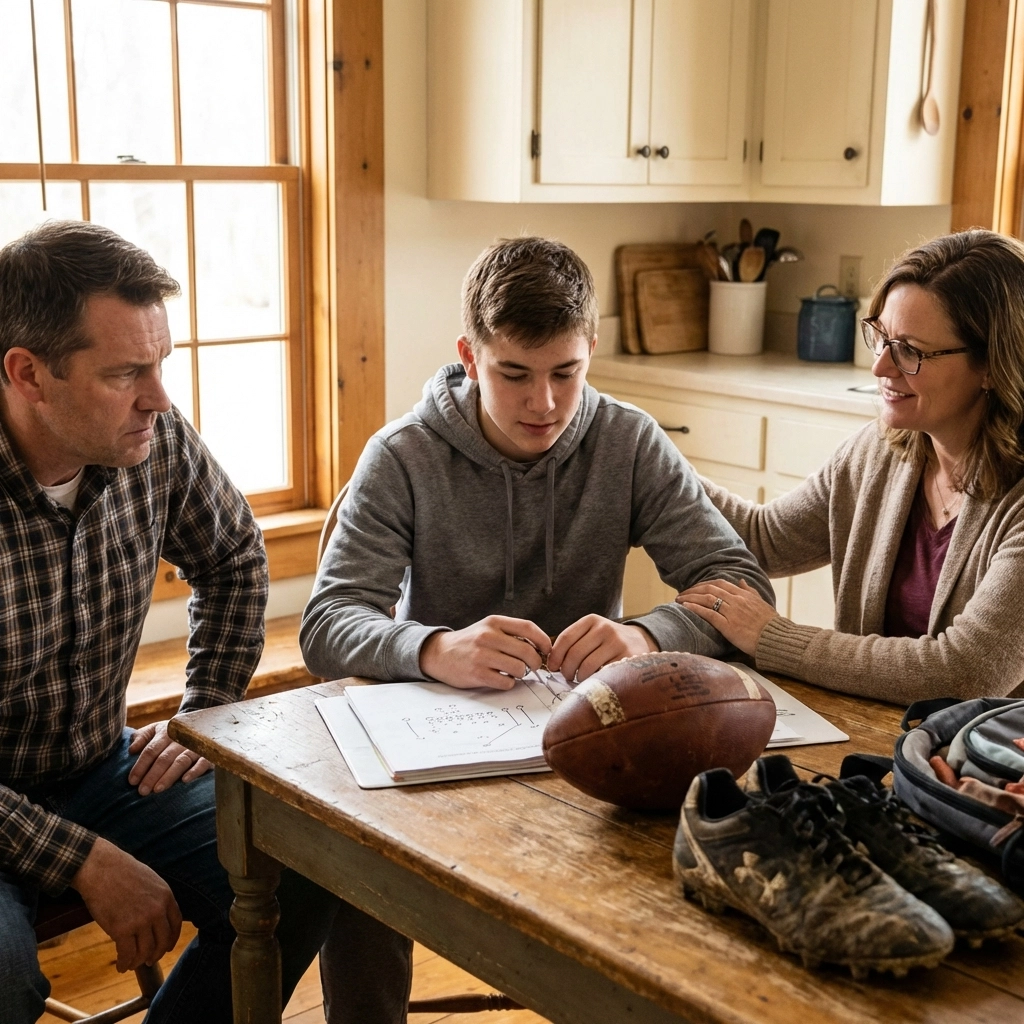
Pro Tip: Sit down with your parents and ask the hard questions. "Am I actually getting better here? Is this coach or program teaching me the skills I need for the next level, or am I just a piece of their winning puzzle?"
If the answer is that you're just a "piece," it’s time to look for a better environment. Whether that is through Senior Fundamentals Training or finding a team that prioritizes growth, you have to make the decision that is best for you.
Actionable Checklist: Is Your Environment Killing Your Career?
⚠️ Warning Signs:
- Your coach gets angry when you ask "Why?" about a play.
- You haven't had a session focused solely on footwork in months.
- The coach ignores your mistakes as long as you win the game.
- You feel more like a "runner" than a "passer" because the system is safe.
✓ Growth Signs:
- Your coach talks about your future in college/university.
- You are encouraged to study film and learn defensive schemes.
- You are allowed to make mistakes in practice if you are trying to master a new skill.
- You are part of a specialized training program that focuses on the individual, not just the team.
Final Thoughts from Coach Ron Raymond
I hate seeing talent go to waste. I hate seeing a kid who could have been a great collegiate/university player walking away from the game at 18 because he was burned out by bad advice and a coach's ego.
Quarterback is the hardest position in sports. It requires a specific type of mentorship. You need to be in an environment where your development is the #1 priority.
Don't let a "winning agenda" today steal your "success story" tomorrow. Talk to your family, evaluate your culture, and make the choice to be part of the elite few who actually reach their potential.
Ready to take your development seriously? Check out our About Page to see how we prioritize the player over the play-call.
Your career is in your hands. Don't hand the remote to someone else.